
Syndic management in Morocco: the complete guide
Last updated:
In Morocco, managing a co-ownership remains a challenge. Between unpaid fees, scattered Excel files, and overflowing WhatsApp groups, the syndic, volunteer or professional, often lacks the right tools. Yet Law 18-00 requires transparency and rigor. Here we cover how to structure management and what tools can help.

What is the best syndic in Morocco?
The choice of the best syndic depends on the size of your co-ownership and your priorities. A volunteer syndic is ideal for small buildings (fewer than 15 units) where costs need to be minimized. A professional syndic is more suitable for large complexes.
The real quality criterion isn't status but method: clear accounting, transparent communication, and rigorous tracking of fees and expenses. A good syndic keeps accurate records, communicates regularly, and presents detailed accounts at general meetings, paid or not.
In Morocco, many small co-ownerships operate without a formal syndic, which creates legal issues. Law 18-00 requires every co-ownership to have a designated syndic. The choice between volunteer and professional depends on available time, skills, and the building's complexity.
What is a professional property syndic?
A professional property syndic is a company or individual who manages co-ownerships for a fee. Unlike the volunteer syndic (a co-owner who manages without compensation), the professional is paid for their services and can manage multiple buildings simultaneously.
Under Law 18-00, both volunteer and professional syndics have exactly the same legal obligations: maintaining separate accounting, convening general meetings, executing voted decisions, and preserving archives. The difference is primarily organizational.
Professional syndics often have dedicated staff, software tools, and established relationships with service providers, which can mean faster response times and more structured management. However, they also charge fees that add to co-ownership expenses.
Who can take action against the syndic?
Any co-owner can take legal action against a negligent syndic. Law 18-00 allows judicial recourse in case of serious breach of legal obligations. Co-owners aren't powerless when faced with mismanagement.
A co-owner can request the syndic's removal in court if they: fail to convene general meetings, fail to present accounts, misuse co-ownership funds, or refuse to execute voted decisions. The action must be brought before the competent court with documented evidence.
That's why keeping records matters. A management tool that keeps records of all transactions, communications, and decisions provides the documentation needed for any dispute. Both syndics and co-owners benefit from transparent record-keeping.
How to change syndic in Morocco?
Changing syndic in Morocco requires a general meeting vote following a specific procedure. Any co-owner can request the inclusion of a "change of syndic" item on the agenda. The current syndic must convene the meeting. If the syndic refuses, any co-owner can request the court to convene it.
The steps are: request the agenda item, convene the general meeting with proper notice, vote on non-renewal or dismissal by three-quarters (3/4) majority (Article 21), elect a new syndic at the same or subsequent meeting. The decision must be recorded in the meeting minutes.
The outgoing syndic must hand over all archives, documents, and accounts to their successor. In case of refusal, judicial recourse is possible: our syndic handover guide details the formal notice, the référé and the astreinte. A structured handover with proper documentation means the next syndic can pick up without gaps.
How are co-ownership fees calculated in Morocco?
Co-ownership fees in Morocco are calculated based on the tantièmes (ownership shares) of each co-owner. These shares are defined in the co-ownership regulations and represent each unit's proportion of the common areas.
Common expenses include: caretaker salary, cleaning services, electricity for common areas, elevator maintenance, building insurance, and general upkeep. These are distributed according to tantièmes. The annual budget is voted at the general meeting, then divided into monthly payments.
Special charges (e.g., elevator for ground floor units) can be distributed differently depending on actual usage. A management tool automatically calculates each owner's share based on their tantièmes and any special rules defined in the regulations.
The role of the syndic in Morocco: definition and legal obligations
The syndic is the person or entity designated to manage a co-ownership. Their role is defined by Law 18-00 on the status of co-ownership of built properties (Dahir No. 1-02-298 of October 3, 2002). They are responsible for:
- Collecting co-ownership fees
- Paying service providers (caretaker, maintenance, common area electricity)
- Maintaining accounts and presenting them at general meetings
- Executing decisions voted by co-owners
- Preserving co-ownership documents
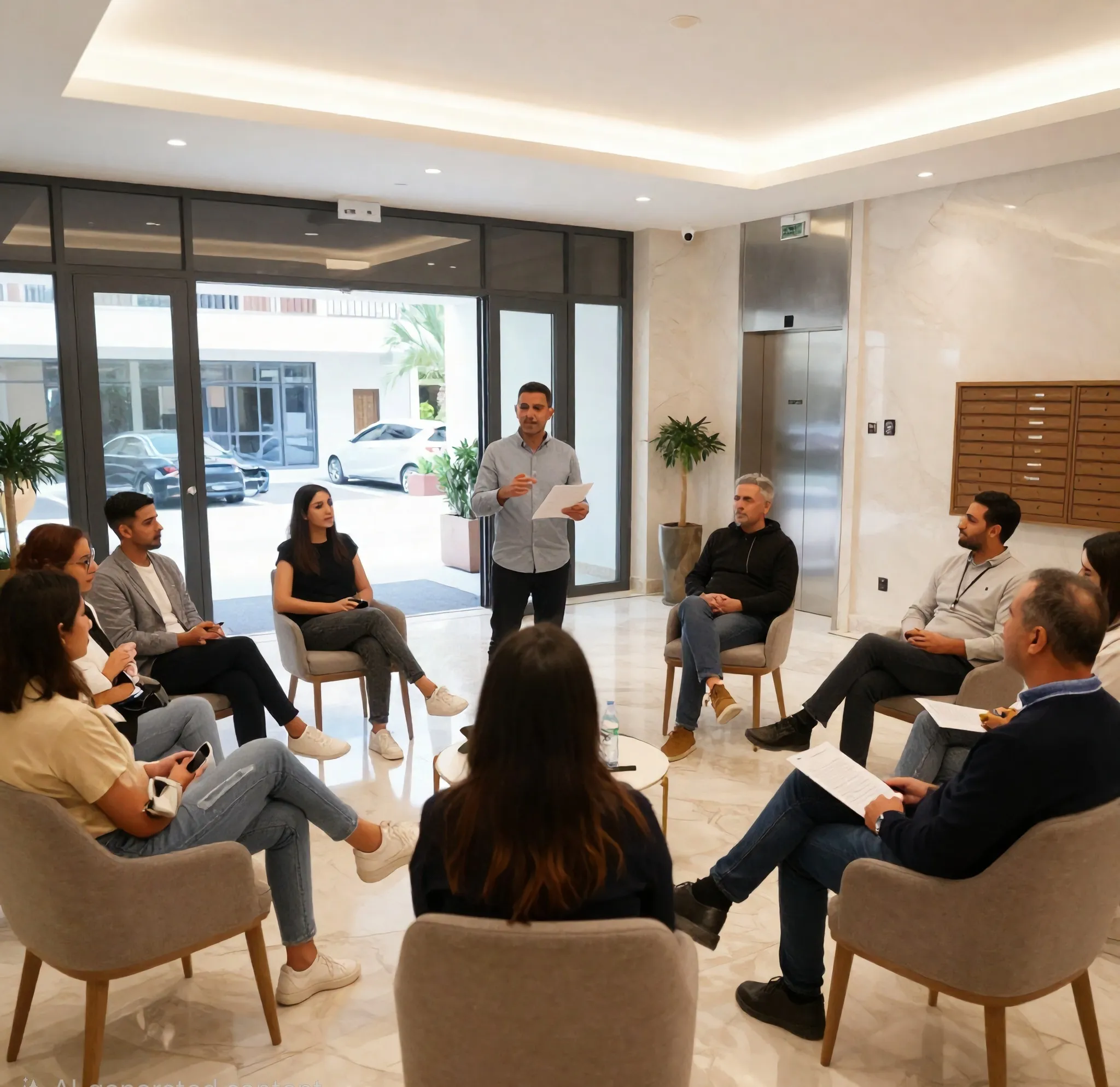
Volunteer syndic or professional syndic?
In Morocco, two types of syndics coexist:
Volunteer syndic
A co-owner elected by the general meeting. They manage without compensation, often by necessity when no one else volunteers. This is the most common case in small buildings.
Professional syndic
A company or manager paid for this service. More common in large complexes or when co-owners prefer to fully delegate management.
Both have the same legal obligations.Law 18-00 doesn't distinguish between volunteer and professional in terms of responsibilities. The syndic must maintain clear accounting, convene general meetings, and report to co-owners. If you're managing your building without pay, our volunteer syndic guide covers the practical reality in detail.
Legal obligations of the syndic under Law 18-00
Law 18-00 precisely defines the syndic's responsibilities. These obligations apply to all syndics, whether volunteer or professional. Ignoring them exposes the syndic to disputes with co-owners.
Accounting obligations
- Maintain separate accounting: co-ownership funds must never be mixed with the syndic's personal accounts.
- Keep all receipts: every expense must be accompanied by an invoice or receipt.
- Present accounts annually: the syndic must submit a financial report for approval at the general meeting.
Administrative obligations
- Convene the annual general meeting: at least once per year, with a clear agenda and sufficient notice.
- Write meeting minutes: every voted decision must be recorded in signed minutes.
- Execute voted decisions: the syndic is mandated to implement what the GM has decided, not to decide alone.
- Preserve archives: co-ownership documents, contracts, and correspondence must be kept and transferred to the successor.
Day-to-day management obligations
- Maintain common areas: elevator, stairs, lighting, green spaces must be kept in good condition.
- Arrange building insurance: building insurance for common areas is voted by 3/4 majority (Article 21), quasi-systematic and strongly recommended.
- Collect fees: the syndic has the obligation to claim due fees, including through judicial means if necessary.
Please note:
Failure to comply with these obligations can engage the syndic's personal liability. A co-owner can request in court the removal of a negligent syndic and claim damages if harm is demonstrated.
The concrete challenges of co-ownership management in Morocco
Managing a co-ownership in Morocco faces concrete difficulties, no matter how hard the syndic tries:
- Fee collection: Some co-owners pay late, others dispute amounts. Without centralized tracking, the syndic loses time verifying who has paid.
- Payment delays: Manual reminders via WhatsApp or phone create personal tensions. The syndic becomes "the bad guy asking for money."
- Expense tracking: Invoices pile up. Explaining where the money went requires compiling scattered data.
- Lack of transparency: Co-owners sometimes doubt the figures presented, due to lack of direct access to data.
- Fragmented communication: Information circulates via WhatsApp, email, calls. Nothing is centralized, nothing is properly archived.
- Absent co-owners: Those who live elsewhere (including abroad) have no visibility into what's happening.
Common consequence:
General meetings last hours, not to make decisions, but to explain and justify figures. Time is spent on the past rather than the building's future.
These problems aren't inevitable. They mainly result from the lack of suitable tools. A shared Excel file isn't designed to manage a co-ownership. A WhatsApp group isn't a management system. When the time comes to evaluate purpose-built syndic software, our 7-criteria evaluation framework for syndic software walks through what to test in a vendor demo before signing anything.
Common mistakes to avoid in co-ownership management
Even with the best intentions, some syndics make mistakes that complicate management and create conflicts. Here are the most common ones and how to avoid them.
1Mixing personal and co-ownership accounts
Using your personal bank account for co-ownership funds is illegal and a source of confusion. In case of dispute, the syndic can't prove fund traceability.
Solution: Open a dedicated bank account for the co-ownership from the start of your term.
2Not convening the annual general meeting
Some syndics "forget" to convene the GM, thinking that as long as everything is going well, it's not necessary. Yet this is a legal obligation, and its absence prevents account approval.
Solution: Schedule the GM on a fixed date each year (for example, always in June).
3Making decisions without assembly vote
Undertaking major work, changing service providers, or modifying fees without GM approval exposes the syndic to challenges and makes decisions legally vulnerable.
Solution: Any non-urgent decision that commits the co-ownership must go through a vote.
4Letting unpaid fees accumulate without action
To avoid conflict, some syndics let payment delays accumulate for months. The longer you wait, the harder debt recovery becomes.
Solution: Implement automatic and systematic reminders from the first month of delay.
5Not documenting expenses
Paying service providers in cash without an invoice, or losing receipts, makes it impossible to justify expenses at the GM. Co-owners have the right to request accurate accounts.
Solution: Photograph each invoice immediately and file it in a digital folder.
6Communicating only via WhatsApp
WhatsApp is convenient but messages get lost, former members no longer have access to history, and nothing is structured. Official invitations via WhatsApp can be challenged.
Solution: Use WhatsApp for informal matters, but centralize official information in a dedicated tool.
Managing a co-ownership and looking for a clearer solution?
Kassaba is a tool designed for the Moroccan context. You can explore the interface without commitment.
How management software simplifies the syndic's work
Kassaba is co-ownership management software designed for the Moroccan context. It doesn't replace the syndic: it gives them the tools to work efficiently and with complete transparency.
Syndic dashboard
An overview of the co-ownership's financial situation:
- •Total amount collected this month, compared to last month
- •Total unpaid balance and per unit
- •Overdue payments with number of months late
- •Available treasury
Fee and payment tracking
Each unit has its complete history:
- •Fees charged by period
- •Payments recorded with date and amount
- •Automatically updated balance
- •Alerts for payment delays
Transparency for residents
Each co-owner can check from their phone:
- •Their current balance
- •Their payment history
- •Fees charged to them
- •Co-ownership expenses (if the syndic shares them)
This visibility reduces repetitive questions and builds trust.
The syndic maintains control: they choose what is visible and what remains private.
History and traceability
All operations are recorded with their date. If the syndic changes, data remains accessible. History allows answering any question about past years without digging through folders or scattered files.
Clear reports for general meetings
Kassaba generates readable financial reports for general meetings: treasury status, payment status by unit, expense details. These documents are ready to present or print, without manual processing.
Reports are exportable to PDF, ready for general meetings.
Practical guide: organizing an effective general meeting
The general meeting is the key moment in the life of a co-ownership. This is where accounts are approved, decisions are voted, and the syndic is renewed. A well-prepared GM takes less time and generates fewer conflicts.
Before the meeting: preparation
Set the date 3 to 4 weeks in advance
Allow enough time for absent co-owners to organize or give a proxy. Avoid vacation periods. The legal minimum notice is 15 days by registered mail (Article 16quinquies).
Prepare the agenda
List precisely each item to vote on: account approval, forecast budget, work to decide, syndic election. A vague agenda = a meeting that drags on.
Send invitations with documents
Attach the financial report, fee status by unit, and quotes for proposed work. Co-owners should be able to study the figures before coming.
Prepare attendance sheets and proxies
Have the list of co-owners with their ownership shares. Check the quorum required for the GM to be valid.
During the meeting: effective conduct
Start by verifying the quorum
Count attendees and proxies. If quorum isn't reached, schedule a second meeting (no quorum requirement for ordinary decisions at the second call, Article 18).
Elect a meeting chair and secretary
The chair leads the discussions, the secretary writes the minutes. These roles give structure to the meeting.
Address each agenda item
Present, discuss, vote. Avoid going back to items already covered. Use a timer if necessary to prevent overruns.
Record votes accurately
Note the result of each vote: for, against, abstentions. These figures must appear in the minutes.
After the meeting: formalities
Write the minutes
Within 8 days of the assembly (Article 30), formalize the minutes with all voted resolutions and have them signed.
Share with absentees
Send the minutes to co-owners who were not present, especially those abroad.
Execute decisions
Implement what was voted: contact service providers, adjust fees, schedule work.
Kassaba tip
With Kassaba, financial reports for the GM are generated automatically. The financial report, fee status by unit, and expense details are ready to present or send to co-owners before the meeting.
Managing buildings with overseas co-owners
Many Moroccan co-ownerships include owners who live abroad: in France, Belgium, the Netherlands, or elsewhere in Europe. For the syndic, this means more questions via WhatsApp, payment confirmation requests, and communication challenges across time zones.
A management tool like Kassaba helps by giving overseas co-owners direct access to their balance, payment history, and building expenses. This reduces the number of messages the syndic needs to handle and builds trust through transparency, regardless of distance.
Are you a co-owner living abroad? See our dedicated guide: MRE Property Management in Morocco: Complete Guide for Owners Abroad
What Kassaba does and doesn't do
Kassaba is a management and transparency tool. It allows the syndic to track fees, record payments, and share information with co-owners.
Kassaba isn't
- A bank: we don't manage money, only its tracking
- A replacement for the syndic: you decide, the tool facilitates execution
- A law firm: information is practical, not legal advice
Kassaba is
- A dashboard to clearly see the financial situation
- A history accessible to all authorized co-owners
- A way to reduce tensions by making figures accessible
Frequently asked questions about syndic management in Morocco
Is Kassaba suitable for small buildings?
Yes. A building with 8 units has the same tracking needs as one with 50: knowing who paid, how much remains in the fund, and where the money went. Size doesn't change the need for clarity.
How much does Kassaba cost?
Kassaba is free during the beta period. We're refining the product with early adopters. When pricing is introduced, current users will receive preferential terms. No credit card required.
Volunteer or professional syndic: what's the difference?
A volunteer syndic is a co-owner who manages without payment. A professional syndic is paid for this service. Both have exactly the same legal obligations under Law 18-00.
How do I migrate from Excel?
Existing data (owners, balances, fees) can be imported. We support the transition to ensure continuity without losing history.
Is it compliant with Moroccan law?
Yes. Kassaba helps comply with Law 18-00 requirements: transparent accounting, operation traceability, and clear communication with co-owners.
Do residents see everything?
Each co-owner sees their own fees, payments, and balance. The syndic controls what is shared. Transparency is adjustable according to the building's needs.
Can I manage multiple buildings?
Yes. Professional syndics can manage multiple co-ownerships from one account, with separate dashboards for each building.
What happens if the syndic changes?
Data remains structured and accessible. The new syndic takes over with a complete and verifiable history, ensuring continuity.
Do all co-owners need to use the app?
No. The syndic can use Kassaba alone for their management. Adoption by co-owners improves transparency and reduces repetitive questions.
How do I organize an effective general meeting?
Prepare the agenda 3-4 weeks in advance, send invitations with the financial report attached, verify the quorum at the start of the session, address each item methodically, and draft the minutes within the days following the meeting.
What are the main legal obligations of the syndic?
Law 18-00 requires the syndic to maintain separate accounting, convene the annual general meeting, execute voted decisions, preserve archives, maintain common areas, and arrange building insurance (voted by 3/4 majority at the assembly, Article 21). These obligations apply equally to volunteer and professional syndics.
How do I handle co-owners who don't pay?
Implement systematic reminders from the first month of delay. Keep a written record of all communications. If the delay persists, the law allows initiating judicial debt collection proceedings. A tracking tool facilitates the necessary documentation.
Can the syndic be held personally liable?
Yes. Failure to comply with legal obligations can engage the syndic's personal liability. A co-owner can request their removal in court and claim damages if harm is proven. That's why traceability of decisions and accounts is essential.
Discover Kassaba
Kassaba is used by volunteer and professional syndics in Morocco. If you're looking for a clearer way to manage your co-ownership, you can create an account and explore the interface.
Questions? [email protected]
Related Guides
MRE Property Management
Complete guide for Moroccan property owners living abroad. Manage charges, track payments, and stay informed from Europe or anywhere in the world.
Kassaba for Residents
Learn how the Kassaba app helps property owners track charges, payments, and building expenses in real-time.
Syndic Accounting Guide
Practical guide to syndic accounting in Morocco, including Decret 2.23.700 compliance and required financial annexes.
Syndic App for Morocco
How a syndic management app helps you manage buildings, track payments, and generate legal documents from anywhere.
Syndic Bylaws Template
Free co-ownership bylaws template compliant with Moroccan Law 18-00, ready to customize for your building.
This guide is provided for informational purposes by the Kassaba team. It does not constitute legal advice. For any legal questions regarding co-ownership, consult a legal professional.